Kader Mohideen
  • About
  • Blog
  • Projects
  • Health
  • Mini Courses
  • Extra
    • AI & ML Encyclopedia
    • Full AI Course
    • Interview Guide
    • AI Interview Prep
    • Book References
    • Quest for AGI
    • AI Papers
    • Lupus

Full AI Course

A personalized, plain-English course from the mathematics of machine learning to deep learning, AI agents, knowledge graphs, ontologies, and emerging AI systems.

✦ One field. One connected learning path.

Full AI Course

Learn the whole story of AI in simple English: the mathematics underneath it, the code that makes it real, and the modern systems that turn models into agents.

Build my learning path Explore all 50 lessons
  • 47 core chapters
  • 3 frontier capstones
  • 100s of visuals and demos
AI understand → build → deploy
∑ Math
</> PyTorch
⬡ Graphs
◎ Agents
01Plain EnglishBuild the mental picture first
02Visual modelSee the idea move and connect
03MathematicsRead every symbol in words
04PyTorchTurn the formula into working code

Your course, not a generic syllabus

Tell the course how you want to learn

Choose three things. Your answers stay in this browser and shape the recommended order, pace, and next lesson.

1. Where are you starting?
2. What is your main goal?
3. How much time per session?

Your recommended route

Foundation-first explorer

Saved on this device
Start lesson 1

A course that remembers

Your progress

0 of 50 lessons complete Personalize your route to begin.
Choose my path

The complete map

Eight connected stages, 50 lessons

Follow the complete sequence or let your profile move the most useful stages to the front. Nothing is locked.

Recommended nowComplete
Stage 015 lessons

Mathematical foundations

Vectors, calculus, optimization, probability, and the learning process—explained as tools, not obstacles.
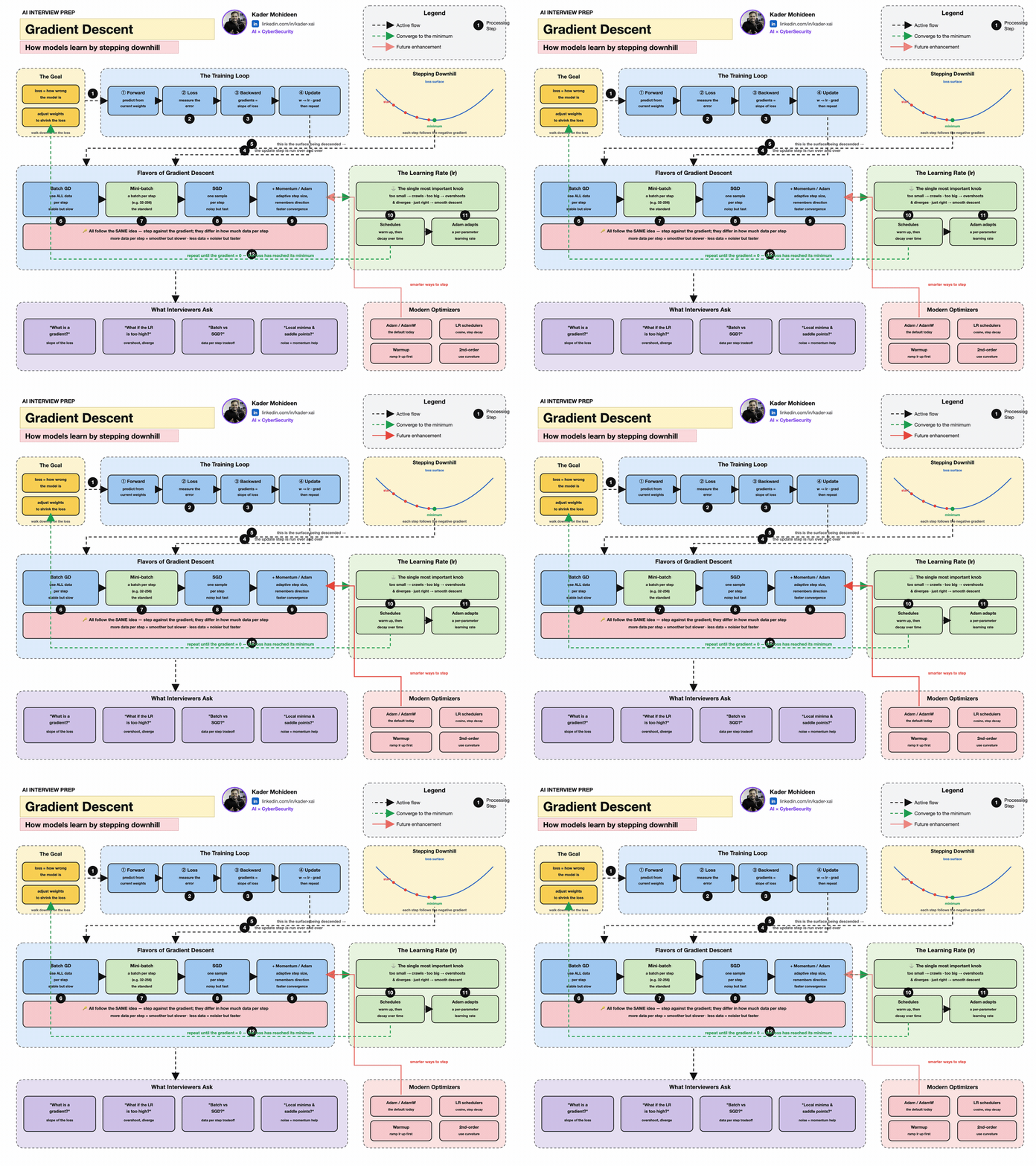
Animated gradient descent moving toward a minimum
See lessons
01Linear algebra 02Calculus & differentiation 03Optimization 04Probability & statistics 05AI, ML & learning
Stage 028 lessons

Classical machine learning

Prepare data, train reliable models, measure them honestly, and understand structured uncertainty.
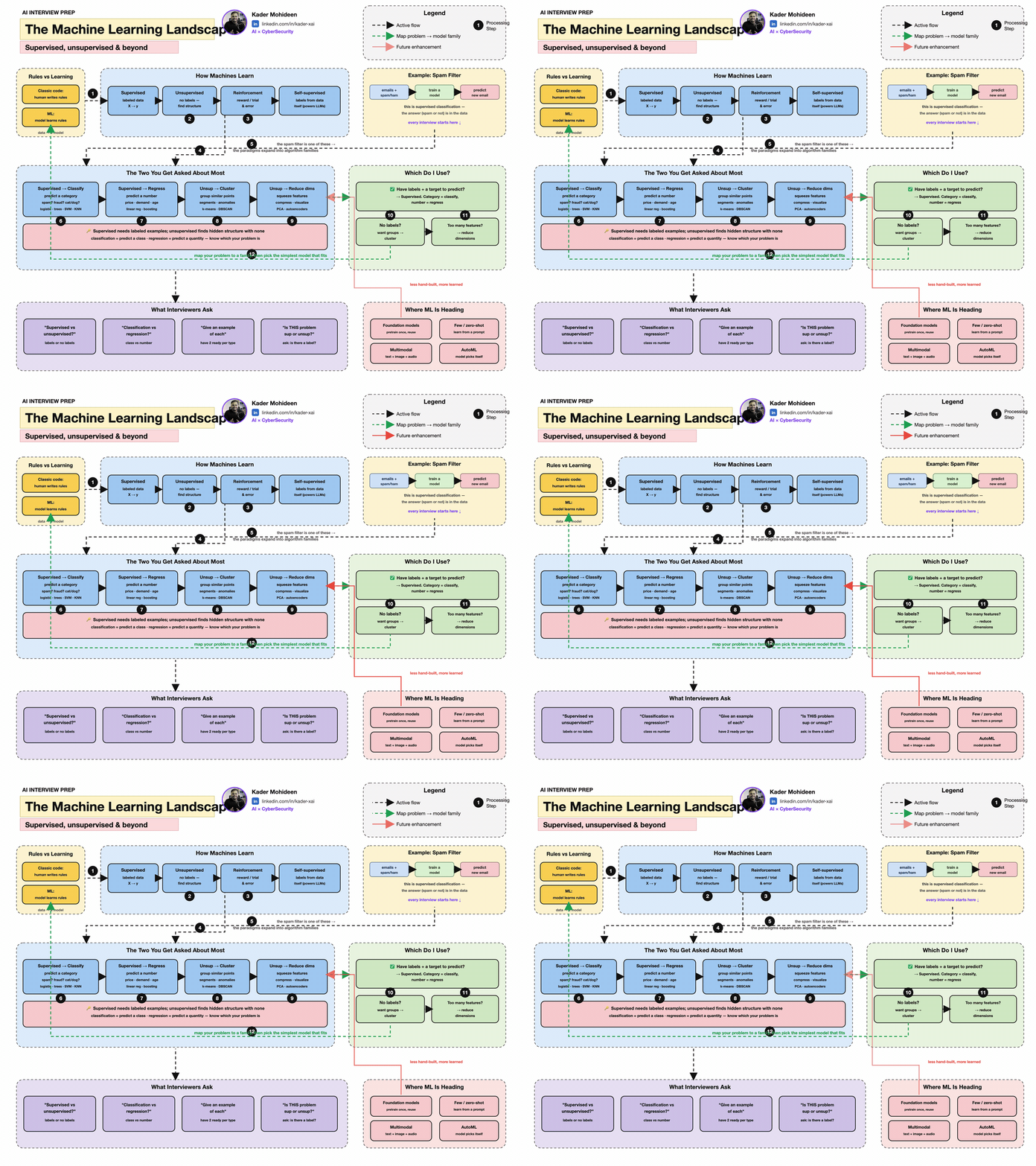
Animated map of the machine learning landscape
See lessons
06Data preprocessing 07Dimensionality reduction 08Regression 09Classification 10Ensembles 11Clustering 12Evaluation & tuning 13Probabilistic graphs
Stage 035 lessons

Deep learning

Neurons, backpropagation, CNNs, sequences, attention, transformers, and generative models in PyTorch.
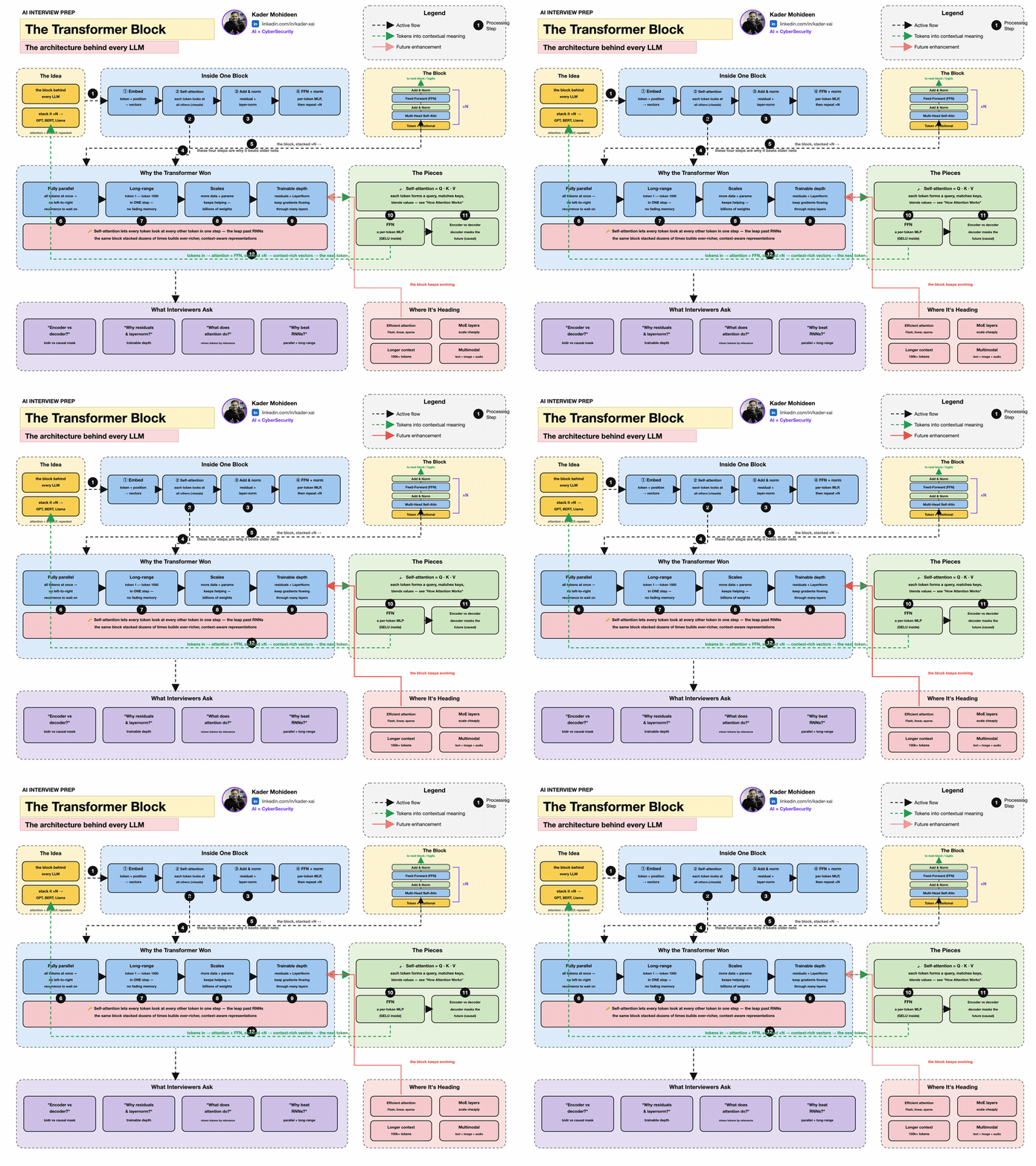
Animated representation of a transformer block
See lessons
14Neural networks 15Convolutional networks 16Sequence models 17Attention & transformers 18Generative models
Stage 0410 lessons

Applied AI

Vision, language, audio, time series, LLMs, multimodal AI, reinforcement learning, and real-world systems.
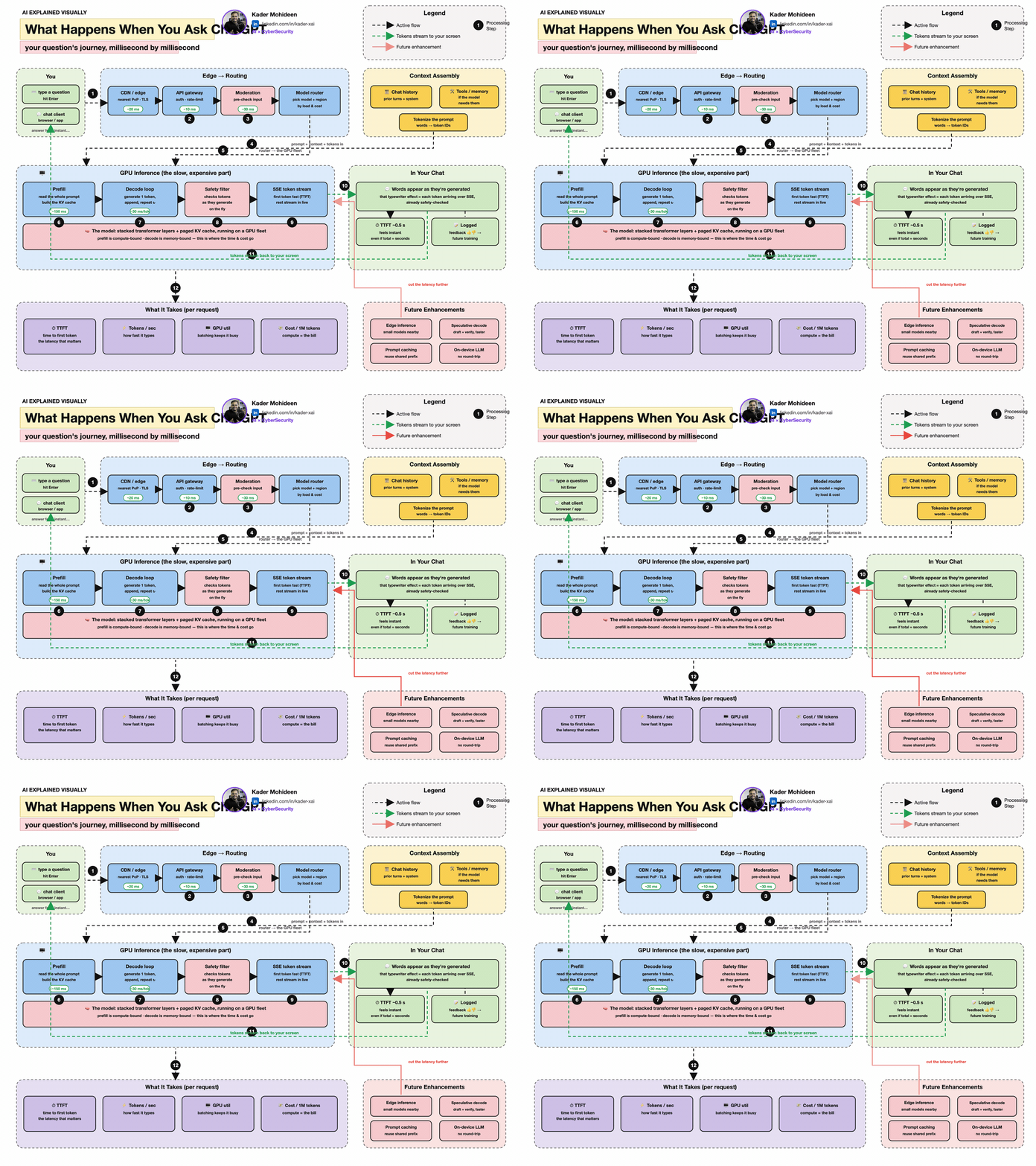
Animated journey of a request through a language model system
See lessons
19Computer vision 20Natural language 21Speech & audio 22Time series 23Large language models 24Multimodal AI 25Reinforcement learning 26Recommenders 27Anomaly & fraud 28AI across industries
Stage 053 lessons

Production & infrastructure

Deploy, monitor, scale, optimize, and govern real AI systems instead of stopping at a notebook.
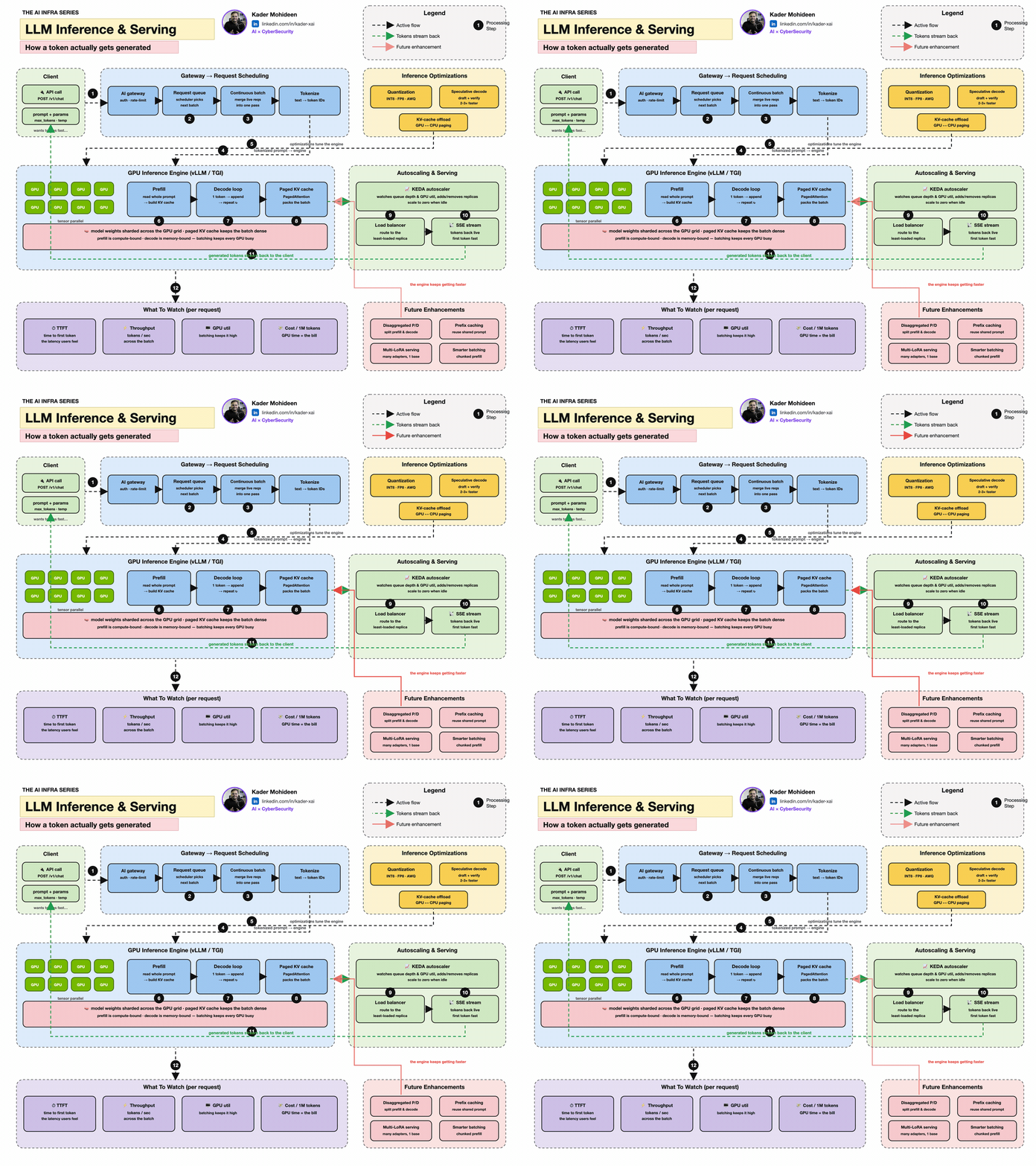
Animated language model inference serving architecture
See lessons
29MLOps & deployment 30AI infrastructure 31Tools & frameworks
Stage 067 lessons

Reasoning, knowledge & safety

Search, logic, planning, ontologies, causal thinking, interpretability, ethics, fairness, and safety.
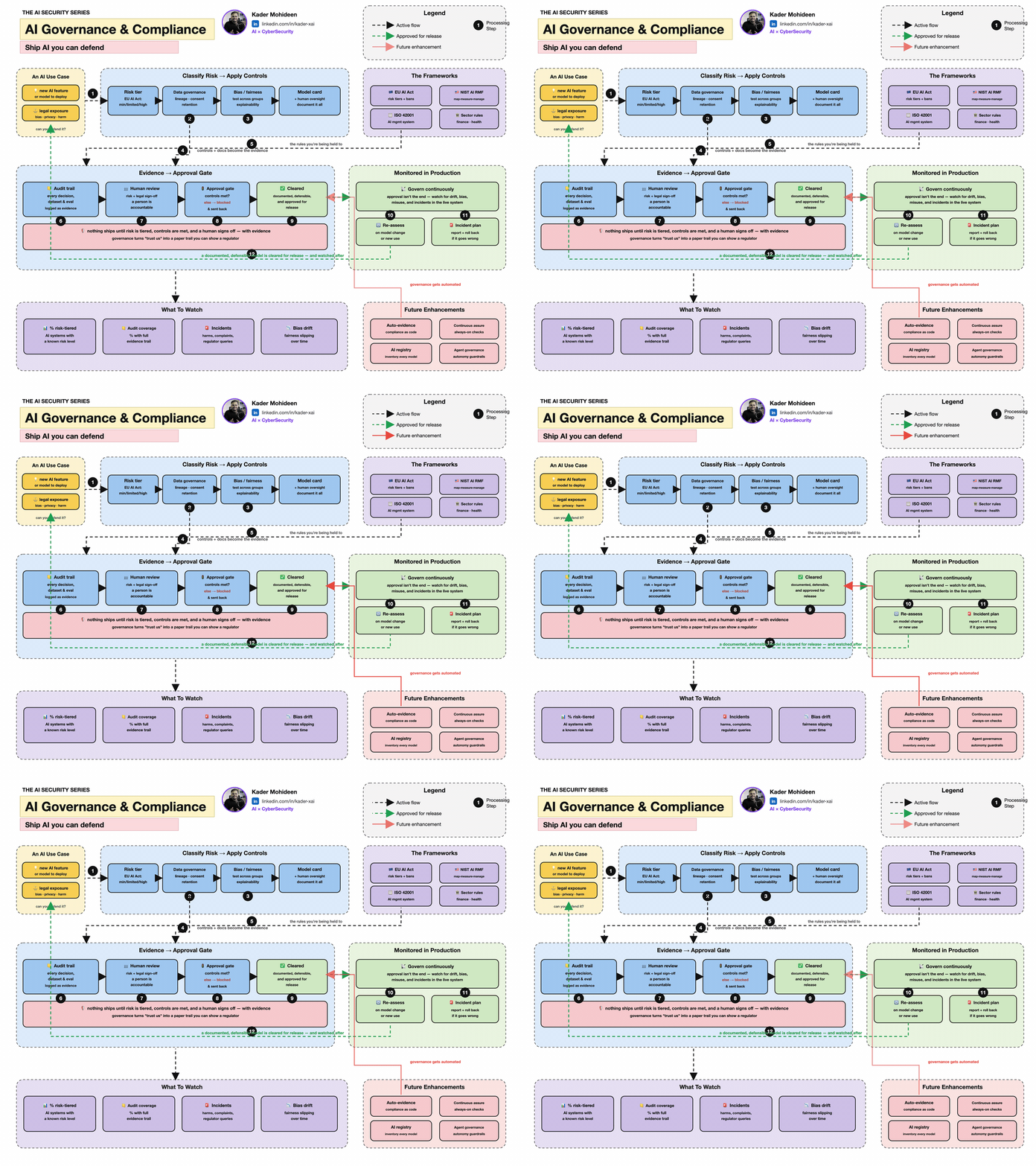
Animated AI governance and compliance framework
See lessons
32Search & problem solving 33Knowledge representation 34Planning & constraints 35Evolutionary methods 36Explainable AI 37Causal inference 38Ethics, fairness & safety
Stage 076 lessons

Graphs, robotics & frontier systems

Graph neural networks, knowledge graphs, robotics, learning theory, retrieval, and building LLMs from scratch.
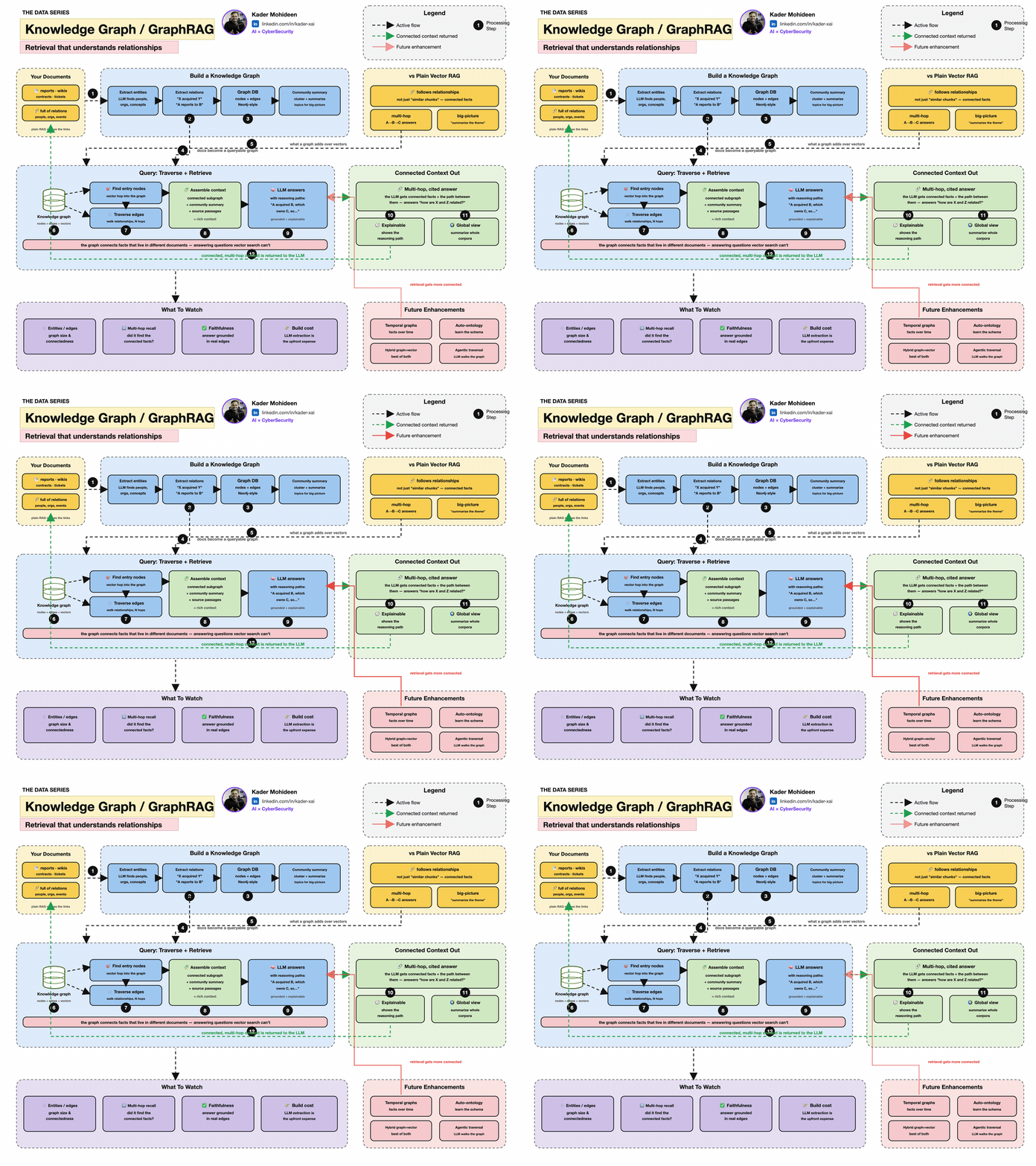
Animated GraphRAG knowledge graph
See lessons
39Emerging directions 40Graph machine learning 41Robotics & autonomy 42Learning theory 43Information retrieval 44Build LLMs from scratch
Stage 086 lessons

Post-training & modern AI capstones

Fine-tune, align, serve, and connect models into safe agentic and knowledge-grounded systems.
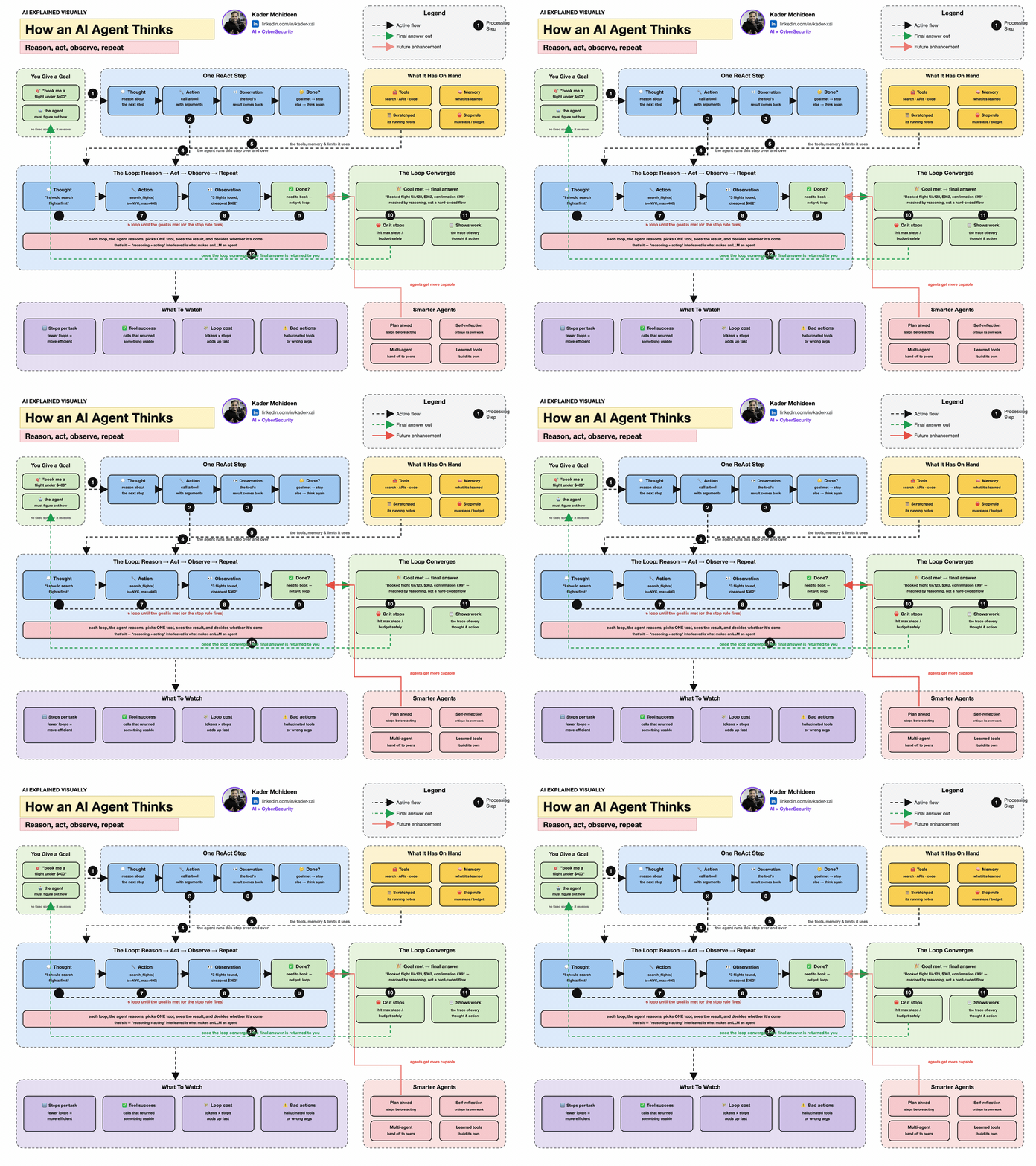
Animated ReAct loop showing how an AI agent thinks and acts
See lessons
45Fine-tuning & PEFT 46Alignment & evaluation 47Serving in production 48AI agents & orchestration New 49Graphs, ontologies & GraphRAG New 50Frontier watch: what is next New

One idea, four representations

The formula is never left floating

Every important equation is translated into ordinary language, a picture, and executable code. Here is the core of one neuron.

Plain English

Score, shift, then squash

Multiply each input by its importance, add them, add a bias, then squeeze the result into a useful range.

Mathematics
\(y = \sigma(Wx + b)\)

W holds learned weights, x is the input, b shifts the decision, and σ adds non-linearity.

PyTorch
import torch

layer = torch.nn.Linear(3, 1)
x = torch.tensor([[0.8, 0.2, 0.5]])
y = torch.sigmoid(layer(x))
print(y)
Why it matters

Stack this idea

One neuron makes a small decision. Millions or billions of these operations, connected in layers, create modern deep-learning models.

Beyond the standard ML syllabus

Modern topics, connected to their foundations

01

Tool-using agents

Planning, memory, tools, handoffs, guardrails, MCP, A2A, and evaluation.

02

Graphs & ontologies

Triples, schemas, GNNs, knowledge graphs, GraphRAG, and grounded reasoning.

03

Reasoning & world models

Test-time compute, model-based agents, embodied AI, and continual learning.

04

Frontier watch

A dated, evidence-linked view of what is becoming practical—and what remains uncertain.

Start small. Keep the whole map.

Your next lesson is the only one that matters today.

Create my learning path
 

© Kader Mohideen